

If you've ever gotten into your car after a stretch of rainy weather and noticed a musty smell you couldn't quite place, you're not imagining it — and you're not alone.
Here in Acadia and Lafayette Parish, we see it every year. Spring rolls in, we get a few weeks of heavy rain, and about a month later our phone starts ringing. The complaint is almost always the same: "I don't know what happened, but my car smells weird."
Here's what happened.
Moisture Doesn't Need a Flood to Cause Damage. It just needs an opportunity to sit.
A wet umbrella left in the backseat. Muddy shoes on the floor mats. A window cracked during a storm. Kids piling in after soccer practice with soaked cleats. None of these feel like a big deal in the moment — but in a closed car in South Louisiana heat, that moisture gets trapped fast.
Fabric seats, carpet, and foam padding are all porous. They absorb moisture readily and, without airflow, they don't dry out the way you'd expect. What you're left with is a slow-growing odor problem that most people don't notice until it's already set in.
The reason it catches people off guard is the timing. The calls we get aren't usually during the rainy stretch — they're two to four weeks after. That's because the smell takes time to develop. Moisture absorbs quietly, the interior stays closed up, and by the time the odor is noticeable, the source isn't obvious anymore. People assume something spilled, or that it's just "how their car smells now."
It's not. It's moisture that had nowhere to go.
South Louisiana Makes This Worse
Most car care advice is written for somewhere with a dry summer. That's not us.
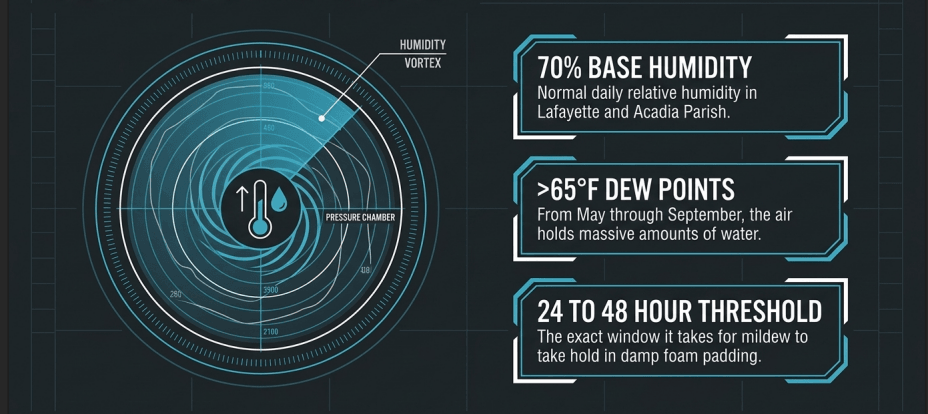
Lafayette sits around 70% relative humidity on a normal day. From May through September, dew points push above 65°F and stay there. A car closed up in that kind of heat and humidity isn't just warm — it's essentially a slow cooker for whatever moisture got in. Mildew doesn't need much: a damp floor mat and 24 to 48 hours is enough to get started.
This is also why the problem compounds. Once mildew takes hold in foam padding or carpet backing, surface wiping doesn't reach it. The odor keeps coming back because the source is still there — just deeper than it looks.
What Actually Fixes It (And What Doesn't)
Masking products buy time. They don't solve the problem.
Air fresheners, odor-eliminating sprays, baking soda — these address the air in your car, not the fabric. If the source is still sitting in your seats or carpet, the smell returns within days. We hear this from customers regularly: "I tried everything and it just keeps coming back."
That's not a product failure. That's the wrong approach to the right problem.
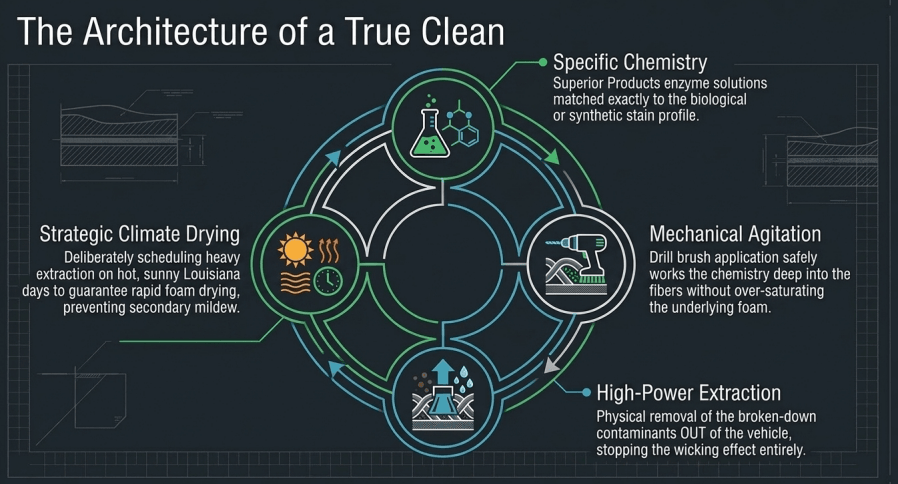
A thorough cleaning of the affected surfaces using an enzyme-based solution is what breaks down odor at its root. Enzyme cleaners work differently from standard cleaners — they contain active cultures that digest organic matter rather than masking or diluting it. For biological odor sources like mildew, sweat, or anything moisture-related, that chemistry is the difference between a temporary fix and a real one.
The process we use at 87 Washes pairs that chemistry with mechanical agitation and extraction — applying the solution, working it into the fabric with a drill brush, and pulling it back out along with whatever it broke down. The goal is removal, not redistribution.
Why the weather on cleaning day matters
This part surprises most people, but it's one of the most important variables in the whole job.
Once upholstery is cleaned, it needs to dry completely — and in South Louisiana, that doesn't happen automatically. We schedule this kind of work on hot, dry days intentionally. Warm sun with the windows down lets heat do the drying work quickly and thoroughly. Clean on a cool or humid day, skip the airflow, and the interior stays damp longer than it should. That creates the exact conditions that caused the problem in the first place.
Proper drying isn't just a comfort thing. It's a quality variable. A job that ends with damp seats isn't finished.
How to Tell If Your Car Has a Moisture Problem
Not every musty smell is obvious. Here are a few signs worth paying attention to:
Smell that gets stronger when you run the AC. The evaporator behind your dashboard collects condensation. If mildew is growing there, the AC circulates it every time you turn it on.
Odor that fades when you open the windows, then returns. Fresh air masks it temporarily. The source is still in the fabric.
Damp or stiff floor mats, especially in the back. Rear passengers track in the most water and those areas get the least airflow. Check the carpet underneath — not just the surface of the mat.
A smell that appeared after a specific weather event, not a spill. Humidity-related odor has a pattern. If you can connect the timeline to a wet stretch of weather, moisture is almost certainly the cause.
The Simple Habit That Prevents the Problem
After heavy rain, take five minutes to check your floor mats and back seat. If anything is damp, pull it out and let it dry separately before putting it back in. That habit alone can prevent a detailing call a month down the road.
For cars that are already past the "let it air out" stage, the fix is a proper cleaning — one that reaches the foam, treats the source, and ends with seats that are genuinely dry before the car gets closed back up.
That's what we do at 87 Washes Mobile Detailing, and we come to you. If your car has been holding onto a smell you can't get rid of, reach out and we'll take a look — Rayne, Acadia Parish, Lafayette Parish, and everywhere in between.